
When you step into a casino, you’re not just entering a world of flashing lights and ringing machines—you’re entering a linguistic subculture with its own unique vocabulary. According to a 2023 survey by the American Gaming Association, 46% of first-time casino visitors reported feeling confused or intimidated by the specialized terminology used by dealers and experienced players. Understanding this secret language isn’t just about fitting in; it’s about navigating the gaming environment with confidence and competence.
Casino slang has evolved over more than 400 years of gambling history, with many terms originating from 17th century card games and dice competitions. Today, this specialized vocabulary encompasses over 500 commonly used terms across different casino games, creating a rich linguistic tapestry that connects gamblers worldwide.
Blackjack Basics
Blackjack, played by approximately 27% of all visitors at Spin Bet, has developed perhaps the most extensive collection of slang terms. At a blackjack table, you’ll frequently hear dealers announce Monkey when a face card (King, Queen, or Jack) appears. These cards, each worth 10 points, appear in roughly 30.8% of hands.
If you’re sitting on a hard 16, it means you have a hand totaling 16 without an Ace (which can count as 1 or 11). A bust occurs when your cards exceed 21—something that happens to players approximately 28% of the time, according to data from major Las Vegas casinos.
Other common blackjack terms include:
- Hit me – Requesting another card
- Stand – Declining additional cards
- Double down – Doubling your bet after seeing your initial cards
- Splitting pairs – Dividing matching cards into two separate hands
Craps Conversation
Craps tables, with their complex betting structures, have developed particularly colorful terminology. When a shooter rolls a 7 on the come-out roll, it’s called a natural and occurs about 16.7% of the time. In contrast, rolling a 2, 3, or 12 on the come-out is called crapping out.
Snake eyes refers to rolling two 1s (a probability of 1 in 36 or approximately 2.78%), while boxcars means rolling two 6s (also 2.78% probability). For the 84% of craps players who prefer the pass line bet, hearing seven out is the dreaded announcement that the shooter has rolled a 7 before making their point.
Slot Machine Slang
Despite modern slot machines featuring digital displays and button controls, many traditional terms remain. One-armed bandit, referring to the lever on older machines, is still used even though 97% of modern slots no longer have physical handles. A jackpot originally referred to a large pot that accumulated when players received a pair of jacks or better—now it simply means a large payout.
When players talk about a machine being hot or cold, they’re expressing the belief that a machine is due for a payout or unlikely to pay out soon. However, with modern random number generators controlling 99.9% of slot outcomes, these perceptions have no actual bearing on results. Each spin has exactly the same odds as the previous one, typically ranging from 85% to 98% return-to-player (RTP) depending on the machine and jurisdiction.
Progressive Jackpot Jargon
Progressive jackpot slots, which account for approximately 15% of all slot machines, have their own terminology. A life-changing hit refers to winning the main progressive jackpot, which averages $2.1 million across major casino networks. Players may describe themselves as jackpot hunting when they specifically seek out machines with large accumulated progressives.
Poker Parlance
Poker, played by an estimated 40 million regular players in the United States alone, has perhaps the richest vocabulary of any casino game. From bad beats (losing despite having a statistically favorable hand) to fish (inexperienced or unskilled players), poker terminology often finds its way into everyday conversation.
| Term | Definition | Game Context | Approximate Usage Frequency |
| Tilt | Emotional state affecting decision-making | When a player makes poor choices after losses | 76% of players experience this monthly |
| River | Final community card in Hold’em | Critical decision point in hand | Used in 100% of Hold’em games |
| Bluff | Betting with a weak hand to deceive opponents | Strategic deception component | Occurs in approximately 18% of hands |
| Shark | Highly skilled, predatory player | Player classification | Top 5% of players earn this designation |
| Donk | Poor or illogical play | Criticism of strategy | Referenced in 33% of post-hand discussions |
Casino Staff Shorthand
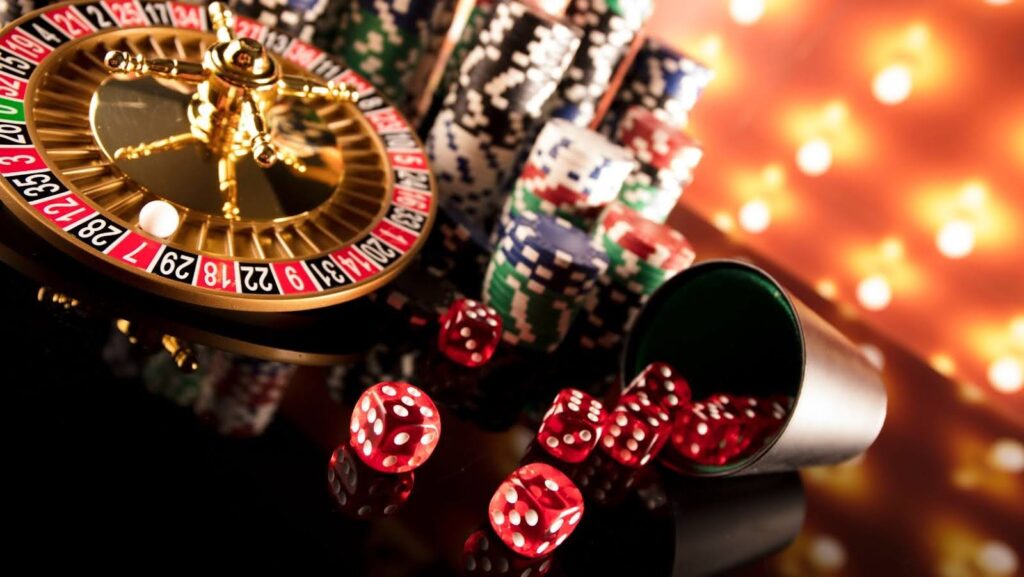
Casino dealers use their own shorthand to communicate efficiently with each other and pit bosses. Coloring up means exchanging smaller denomination chips for larger ones—a process that happens approximately 250 times per day at a typical blackjack table. Tapping out signals a dealer’s shift change, occurring every 40 minutes on average to prevent fatigue and maintain game integrity.
When dealers announce checks to play, they’re confirming that chips are genuine and acceptable for play—an important verification in an industry where counterfeit chips result in approximately $15 million in annual losses across North American casinos.
Surveillance Speak
The eye in the sky refers to the surveillance system watching over casino floors—typically one camera for every 10 square feet of gaming space. Security personnel might report a past-poster (someone trying to place a bet after the outcome is known) or a railbird (a non-playing observer who hovers around tables). According to the Nevada Gaming Control Board, these surveillance systems help identify approximately 1,200 instances of cheating attempts annually across Las Vegas casinos alone.
Modern Gambling Terms
As online gambling has grown to represent 26% of the global gambling market, new terminology has emerged. RNG (Random Number Generator) refers to the algorithm that determines digital game outcomes, while auto-spin describes the feature allowing slot players to pre-set multiple spins.
Furthermore, terms like KYC (Know Your Customer) relate to the identification verification process required by online casinos—a procedure that prevents an estimated $2.7 billion in potential fraud annually.
Speaking the Language
Learning casino terminology isn’t just about understanding what’s happening around you—it can actually improve your gambling experience and potentially your outcomes. A 2024 study from the University of Nevada found that players who understood gaming terminology made approximately 14% fewer errors in strategic decision-making compared to those unfamiliar with the lingo.
Whether you’re placing chips on the felt or spinning digital reels online, speaking the language of gamblers connects you to centuries of gaming tradition while helping you navigate today’s casino environment with confidence. Remember that while understanding the terminology is valuable, no amount of slang knowledge can overcome the mathematical house edge that gives casinos their profit margin—typically ranging from 0.5% in optimal blackjack to over 25% on certain slot machines.
The next time you visit a casino, listen for these terms and you’ll find yourself decoding the secret language that surrounds you, transforming what might have once seemed like confusing jargon into a familiar conversation between fellow players.